
How many pieces does a tool set actually need?

How many pieces does a tool set actually need?
Piece counts sell tool kits, and they are the least useful number on the box. A 515-piece set and a 144-piece set can contain almost the same working tools; the difference is usually two hundred screwdriver bits and a bag of hex keys.
What the number is counting
Every individual item counts as a piece. That includes each socket, each bit, each hex key, each cable tie and, on some kits, the case itself. A set advertised as 142 pieces might break down as 40 sockets, 60 driver bits, 12 hex keys, 20 assorted fixings and about ten actual tools.
None of that is dishonest. It only becomes a problem when a buyer compares two boxes on the number alone and picks the one with fewer of the things they will actually pick up.
Count the handles, not the pieces
The useful test at the counter is simple: how many things in this box have a handle? Those are the tools. Everything else is consumable or interchangeable.
A genuinely complete household kit has roughly this list of handled tools:
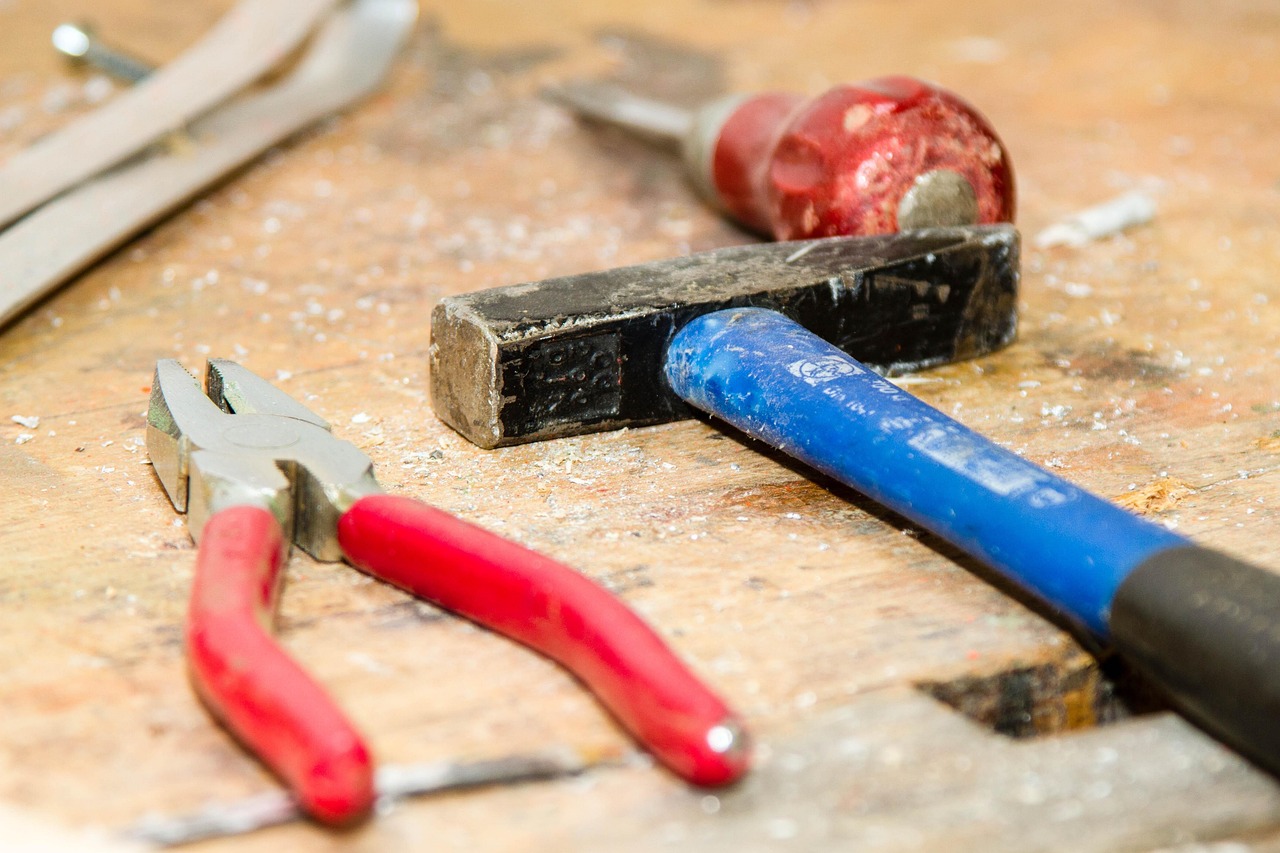
- A claw hammer, 16 oz for general work
- Adjustable wrench, 8 inch
- Combination pliers, long-nose pliers, and a set of side cutters
- A ratchet with a socket set covering both metric and imperial
- A screwdriver handle that takes bits, or a small set of fixed drivers
- A tape measure, a utility knife and a small level
Twelve to fifteen handled items. If a 500-piece kit has ten and a 140-piece kit has fourteen, the smaller box is the better tool set.
Where the bits matter
Having said that, bit count is not meaningless. Modern fixings have proliferated, and being caught without a T20 or a square drive on a Saturday is a genuine nuisance in Carrollton, where the nearest replacement is a drive away.
What matters is bit coverage, not bit count:
- Phillips PH1, PH2, PH3 — PH2 does most of the work
- Slotted in three widths
- Torx T10 through T30, the range most consumer electronics and appliances use
- Hex both metric and imperial, because furniture and bicycles disagree
- Square drive if you touch anything built in North America
Twenty well-chosen bits beat a hundred and twenty in decorative sizes.
Quality, honestly assessed
Piece count and quality are usually in tension at a given price. A 515-piece kit and a 100-piece kit at the same money have made opposite decisions about where the budget went.
Three things to look at:
- Steel marking. Chrome vanadium (Cr-V) on hand tools is the ordinary standard; sockets should say so on the barrel. Bits marked S2 hold up far better than unmarked ones.
- The ratchet. Turn it. A good ratchet has a fine tooth count — 72 teeth means a 5-degree swing arc, which matters in a tight space. A coarse ratchet with a 12-degree arc is unusable behind a dishwasher.
- The plier joint. Open and close it. Play at the pivot on day one becomes slop in a year.
The case is part of the purchase
A blow-moulded case with a shaped socket for every piece is genuinely useful, because it tells you at a glance what is missing. A soft bag with everything loose in the bottom is lighter to carry and guarantees that within a year you own an unknown fraction of what you bought.
Trolley cases are worth it if the kit lives in a truck or moves between jobs. In an apartment they are large, and the wheels are dead weight.
Buying twice on purpose
Our honest advice at the counter, and the reason we stock both ends of the range: buy a mid-priced complete kit now, use it for a year, then replace individually the three or four tools you have worn out or found wanting. Those replacements are the ones worth spending real money on, because you now know you use them.
Buying a premium kit first means paying a premium for the eleven tools you will touch twice.
Two kits, two jobs
If you are equipping a home rather than a trade, there is a case for two smaller kits instead of one large one: a compact set that lives in the kitchen drawer for the five-minute jobs, and the full box in the garage. The drawer set gets used because it is there. The garage box stays complete because nothing gets borrowed from it.
Ask in either language
Bring the job to the counter rather than the box. Tell us what you are trying to do — hanging a TV, assembling flat-pack, changing a faucet — and we will tell you which of the kits on the shelf actually covers it, in English or in Spanish. Sometimes the answer is that you need three tools, not a kit at all, and we would rather say so.
Storage cases and the missing-piece problem
One more argument for counting handles rather than pieces: the more small items a kit contains, the more of them will be missing within a year, and the harder it is to notice. A blow-moulded tray with a shaped recess for every socket tells you at a glance that the 13 mm is gone. A zip bag with three hundred pieces loose in it does not, and you find out at the moment you need the one that is missing.
If a kit you like comes in a soft bag, budget for a small compartment organiser at the same time. Sorting bits by drive type into a divided box takes twenty minutes once and saves the same twenty minutes every subsequent month.
Trolley cases, honestly assessed
The large kits sold in aluminium trolley cases look impressive and are genuinely useful in exactly one situation: a kit that moves between sites over flat ground. In an apartment, the wheels and the telescopic handle are ten pounds of dead weight you carry up the stairs every time. In a truck, they are ten pounds of the payload.
The alternative that works for most people is a mid-sized case that fits under a bench, plus a small bag for what actually leaves the house.
Warranty terms are worth reading once
Hand tools frequently carry a lifetime warranty, and the terms vary more than the phrase suggests. Some cover the tool for the life of the original owner with proof of purchase; some cover manufacturing defects only; some exclude anything used commercially. None of them cover a screwdriver used as a chisel, which is the most common way hand tools die.
Keep the receipt with the case rather than in a drawer. A warranty you cannot evidence is not a warranty, and it is the reason people replace tools that would have been swapped free.